Interactive Explorer
The PQID-Bench explorer is a static Plotly report generated deterministically from the frozen evaluator, ordered-structure, and repeatability artifacts. It does not contact model providers, retain credentials, execute generated code, or change any benchmark result.
The explorer provides five coordinated views:
- the operational-to-structural measurement ladder;
- model-level execution, assembly, and reference-signature profiles;
- a component and nested-structure recovery matrix;
- three-run stochastic-repeatability estimates; and
- provider-route aggregates, reported descriptively rather than as causal vendor comparisons.
Workflow Map
Open the ecosystem workflow diagram

The flowchart separates the frozen PQID source, deterministic benchmark split, model-response collection, isolated Docker replay, numerical reports, and interactive presentation. The explorer is the final presentation layer; it does not sit inside the scoring path.
Static Overview Charts
Two repository-facing charts summarize the object of study without requiring JavaScript:
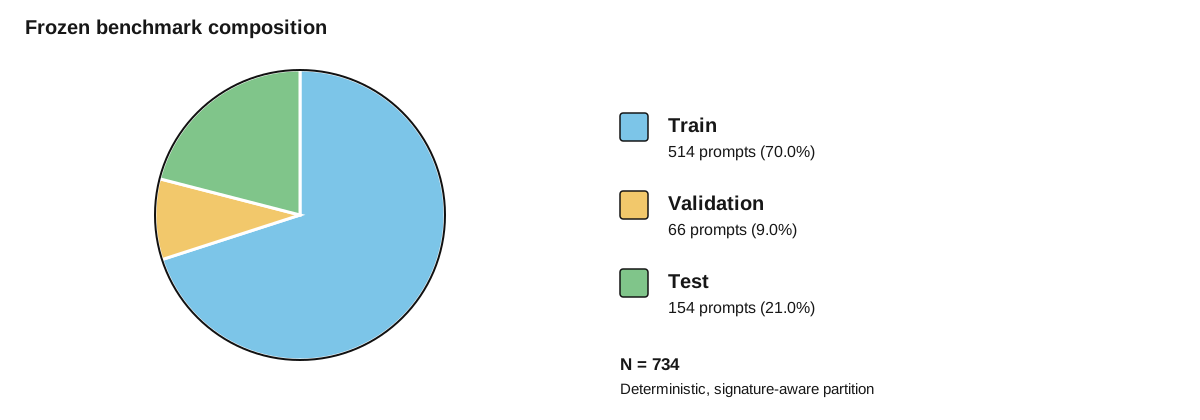
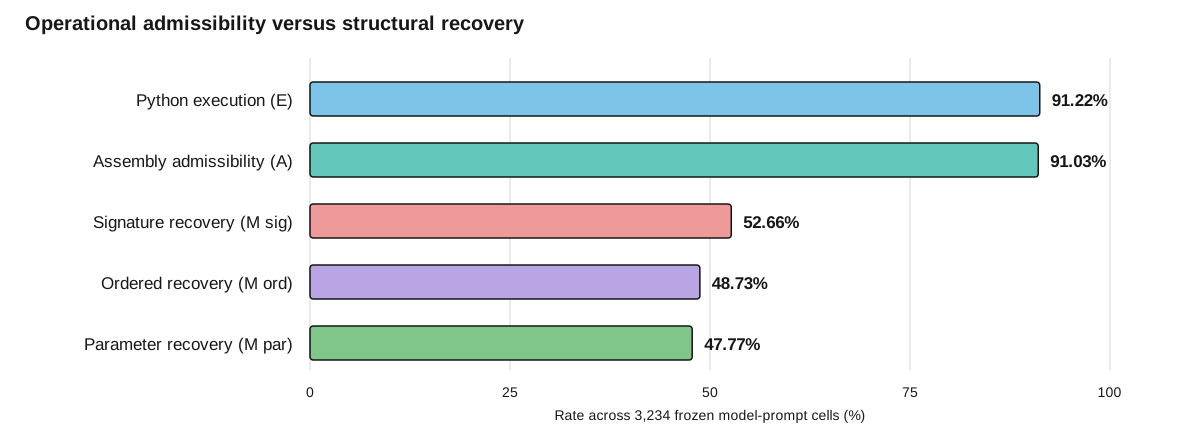
Both charts are generated from the released split files and frozen evaluation summary during the Pages build. They are explanatory views, not separately maintained result files.
Generate A Local Report
Install the optional visualization dependency:
python -m pip install "pqid-bench[visualization]"
Generate a self-contained report that works without a network connection:
pqid-bench dashboard \
  --release-dir /path/to/PQID-Bench \
  --output pqid-bench-dashboard.html
The default embeds Plotly.js in the output HTML. Use --plotlyjs cdn for a
smaller file that loads Plotly.js from its content-delivery network.
The command validates the 21 model rows against the frozen aggregate counts
before writing any output. Its model table and charts can therefore be traced
back to the same archived evidence used by pqid-bench reproduce.
Interface Boundary
Plotly replaces the former Gradio concept for result exploration, not for
provider-backed model execution. Live model collection remains an explicit CLI
operation through pqid-bench run-model, and generated-code execution remains
confined to pqid-bench replay inside the isolated Docker evaluator. A
browser-based live runner would require a separate authenticated server and is
outside the frozen release.